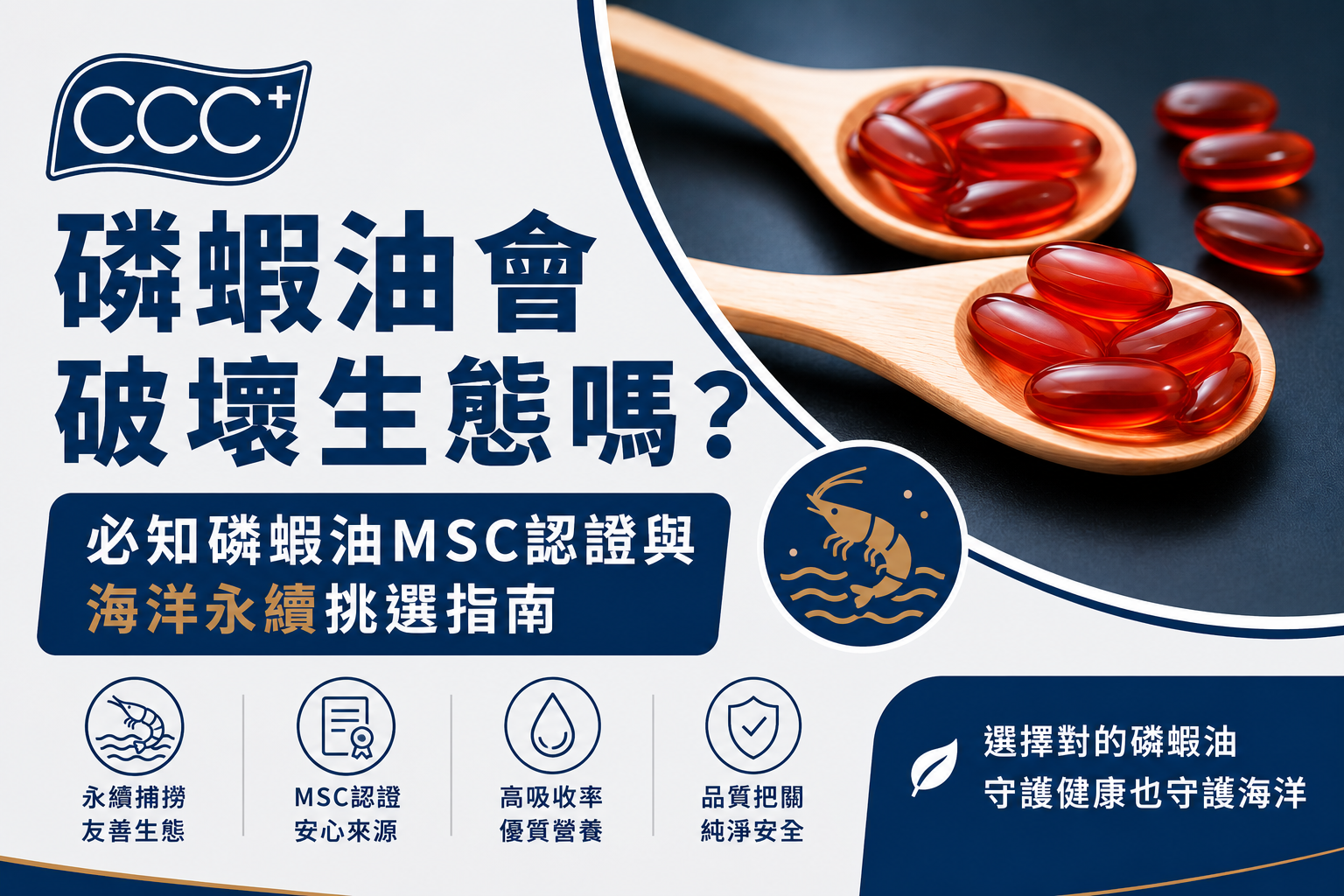
Omega-3 supplementation has become part of everyday wellness, and krill oil stands out because its phospholipid-bound omega-3s tend to offer better bioavailability than conventional fish oil. Yet one question comes up again and again from brand owners and consumers alike: does harvesting krill damage the marine ecosystem? Because Antarctic krill is a key food source for whales and penguins, krill fishing is often discussed alongside ecological concerns. The truth is that ocean sustainability does not hinge on banning harvesting altogether, but on whether strict scientific monitoring and quota systems are actually enforced. This article explains how Antarctic krill is harvested and managed, and how to choose a healthy, sustainable omega-3 source using MSC certification as your guide.
When people hear "Antarctic krill," the first worry is often whether harvesting will disrupt the polar food chain, since krill are a vital food source for penguins, whales and other marine life. In reality, what affects the marine ecosystem is not whether harvesting happens, but whether it is governed by science-based management, strict quotas and full monitoring. Responsible, sustainable harvesting keeps extraction within the limits of what the resource can naturally regenerate.
According to recent United Nations reporting on the state of world fisheries, a significant share of global fish stocks are overfished, making the balance between resource use and ecological health a central challenge for the industry. Leading krill suppliers address this through several key practices:
The most reputable krill raw-material suppliers were among the first to earn MSC certification for Antarctic krill, scoring highly on fishery management, ecological impact and stock sustainability, and consistently receiving top ratings from sustainable-fishery partnerships.
Because krill are a foundational part of the Antarctic ecosystem, raw-material quality is only part of the story. When selecting a krill oil, it also pays to check whether the product carries MSC (Marine Stewardship Council) certification. MSC certification is built on rigorous scientific standards that regulate fishing from the source, requiring fisheries to meet sustainability thresholds in stock assessment, population health and ecosystem protection. Certified fisheries must practise responsible harvesting that safeguards the long-term reproduction of target species while minimising disturbance to bycatch species and marine habitats.
MSC certification is widely regarded as one of the world's strictest sustainable-fishery labels. Products carrying it must satisfy three core principles:
MSC also enforces a strict Chain of Custody (CoC) system, requiring every stage from harvesting, processing and packaging to transport and sale to be documented and clearly separated from uncertified material, giving the product full traceability from source to shelf.
For consumers, supplement quality cannot be judged by appearance alone, so transparent sourcing and a traceable supply chain have become important buying criteria. When choosing krill oil and other omega-3 supplements, beyond EPA and DHA content and absorption, the MSC label on the packaging signals that the raw material comes from a sustainably managed fishery and that the entire supply chain has been independently verified. This protects not only your own health but also supports responsible fisheries, allowing ocean resources to be used sustainably for future generations.
If you are planning to launch your own krill oil brand, ACC BIOTECH is your one-stop OEM and contract manufacturing partner in Hong Kong. We help brand owners develop krill oil softgels and other omega-3 formulations using sustainably sourced, MSC-traceable raw materials, backed by GMP, HACCP and ISO-certified production. From formula development and sourcing to softgel encapsulation, packaging, labelling and regulatory support for Greater China and ASEAN markets, our team turns your krill oil concept into a market-ready product. To make krill oil OEM products, talk to ACC BIOTECH.
Not when it is done responsibly. Well-managed Antarctic krill fisheries harvest less than 1% of the estimated total biomass each year, use eco-friendly gear that keeps bycatch near zero, and operate under independent monitoring. Choosing MSC-certified krill oil helps ensure your product comes from a sustainably managed source.
Krill oil delivers omega-3s (EPA and DHA) largely in phospholipid form, which tends to be more readily absorbed by the body than the triglyceride form found in conventional fish oil. Krill oil also naturally contains astaxanthin, an antioxidant.
The MSC label indicates the raw material comes from a fishery certified against strict sustainability standards covering stock health, ecosystem impact and management, with a documented Chain of Custody ensuring traceability from ocean to shelf.
Yes. ACC BIOTECH provides one-stop krill oil OEM and private-label manufacturing, including formulation, sustainable raw-material sourcing, softgel production, packaging and regulatory support. Contact us to discuss your krill oil project.