A comprehensive guide to softgel manufacturing for health supplements, covering the rotary die process, equipment requirements, and quality control essentials.
Softgels offer unique advantages for health supplement delivery, particularly for oil-based ingredients like omega-3s, vitamin E, and CoQ10. Their seamless construction eliminates the issues of capsule splitting, while the gelatin shell provides excellent protection against oxidation and environmental degradation.
Pharmaceutical-grade gelatin is melted with plasticizers (typically glycerin) and water to form a flexible mass. The exact composition affects shell properties including elasticity, dissolution time, and stability.
The supplement contents (oils, suspensions, or pastes) are prepared, mixed, and filtered. For oil-based supplements, antioxidants are typically added to extend shelf life.
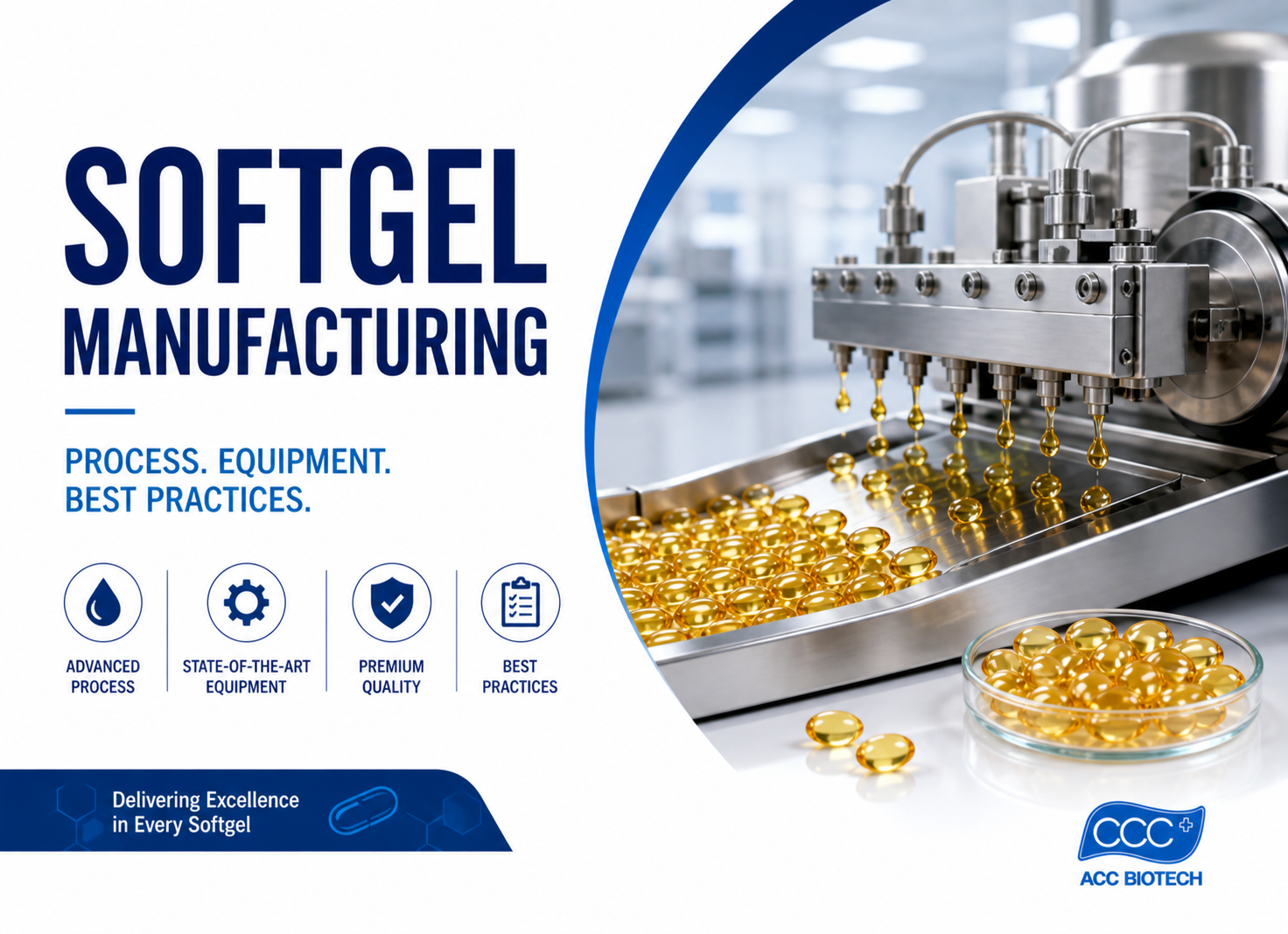
The core process: two ribbons of gelatin are formed and converged on a rotating die. The fill material is precisely metered between the ribbons, which are then sealed and cut into individual softgels. This happens at high speeds with remarkable precision.
Newly formed softgels contain excess moisture and must be dried to achieve final hardness and stability. Tumble drying followed by tray drying typically takes 2-7 days.
Softgels are inspected for size, shape, and visual defects. They're polished to remove residual oil and ensure attractive appearance.
Many popular supplements are ideally suited to softgel format:
Softgels must maintain shell integrity throughout shelf life. Compatibility between fill material and shell is crucial—incompatible combinations can cause leakage, brittleness, or shell deformation.
While traditional softgels use animal-derived gelatin, vegetarian alternatives using carrageenan or modified starch are increasingly popular. These require specialized equipment and formulation expertise.
Softgels require comprehensive stability testing under various temperature and humidity conditions to confirm shelf life claims and ensure ingredient potency throughout the product lifecycle.
ACC Biotech (www.accbiotech.com) operates state-of-the-art softgel manufacturing lines capable of producing standard, vegetarian, and specialty softgels. Our facilities feature multiple encapsulation lines, advanced drying systems, and comprehensive quality control. We have particular expertise in marine oil supplements, including fish oil and krill oil softgels. Whether you're developing a new product or transitioning manufacturers, ACC Biotech delivers softgel excellence. Contact us today.
More from ACC Biotech: visit our international certifications, production equipment page, or contact us to discuss your project.