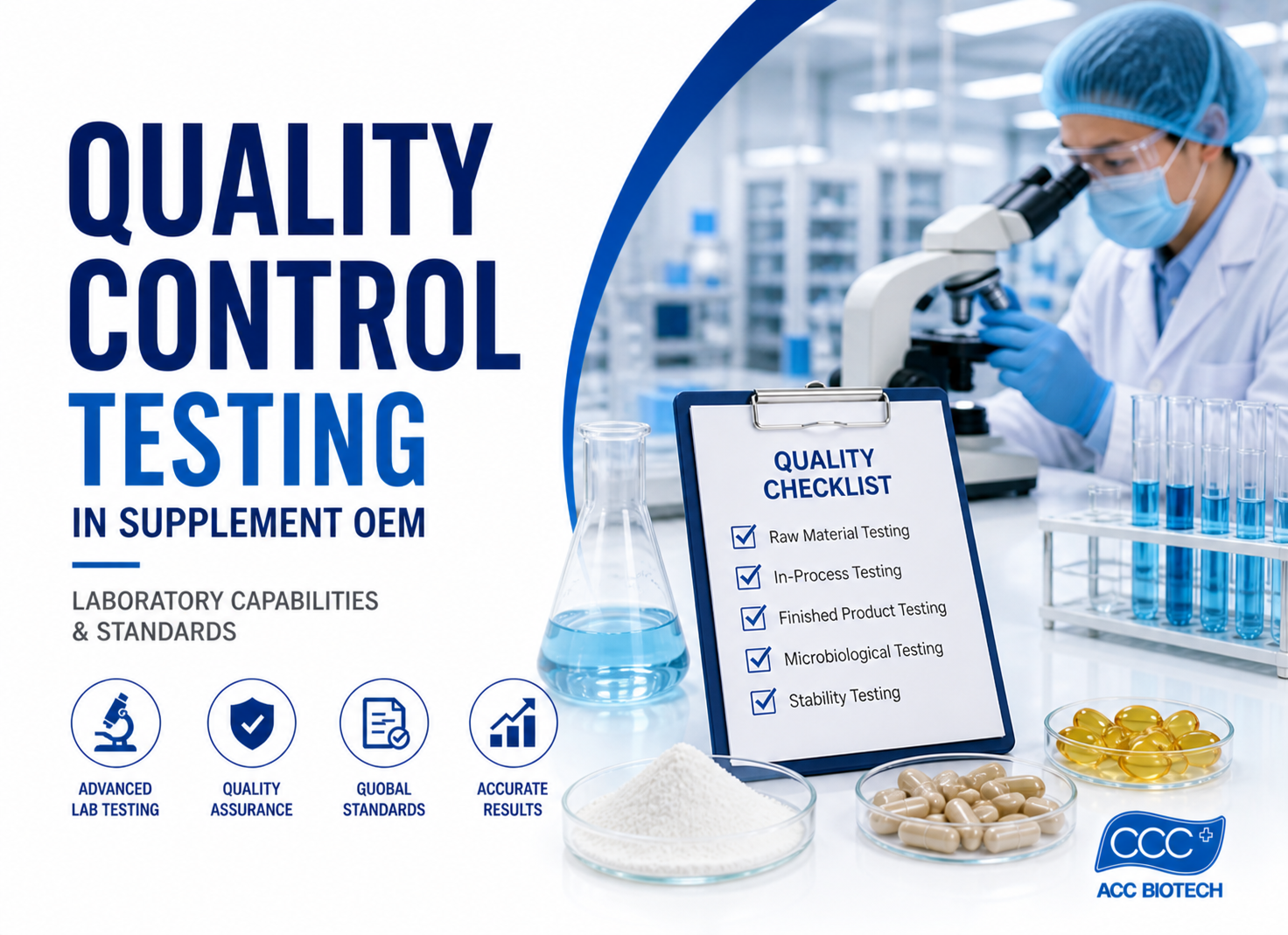
Understanding the comprehensive quality control testing required in health supplement OEM manufacturing, from raw materials to finished products.
Quality control testing is the cornerstone of reliable health supplement OEM manufacturing. Comprehensive testing protocols ensure that every product meets specifications for safety, potency, and purity—building consumer trust and protecting brand reputation.
Quality starts with raw materials. Every incoming ingredient must be tested before use:
Throughout manufacturing, in-process testing ensures the production stays on specification:
Before release, every batch undergoes comprehensive finished product testing:
Appearance, dimensions, weight uniformity, disintegration, and dissolution testing confirm physical product attributes meet specifications.
Active ingredient assays using HPLC, GC, or other techniques verify potency. Multiple stability time points ensure product stability throughout shelf life.
Total aerobic count, yeast and mold, and specific pathogen testing ensure microbiological safety. Testing follows USP, EP, or other relevant pharmacopeial methods.
Heavy metals, pesticides, mycotoxins, and other contaminants are tested to ensure products meet international safety standards.
Stability programs determine product shelf life under various storage conditions:
Every test must be documented in accordance with GMP requirements. Records include test methods, specifications, raw data, calculations, and conclusions. Complete traceability allows investigation of any quality issues.
ACC Biotech (www.accbiotech.com) operates a comprehensive in-house quality control laboratory equipped with state-of-the-art analytical instruments. Our QC team includes experienced analysts and microbiologists who ensure every batch meets stringent quality specifications. We provide complete Certificates of Analysis for all OEM products and maintain extensive documentation. Partner with ACC Biotech for OEM manufacturing where quality is never compromised.
More from ACC Biotech: visit our international certifications, production equipment page, or contact us to discuss your project.