The recent controversy surrounding the "Youthit" brand — caught up in a "fake foreign brand" scandal and accusations of misleading marketing — made headlines. But it is only the tip of the iceberg.
For years, the cross-border supplement sector has operated in a grey zone, exploiting information gaps and regulatory loopholes. Some brands ran "bonded-warehouse day trip" schemes to disguise a product’s true origin, or repackaged pharmacological ingredients banned domestically as "miracle imports." Those wild-growth days are coming to an end.
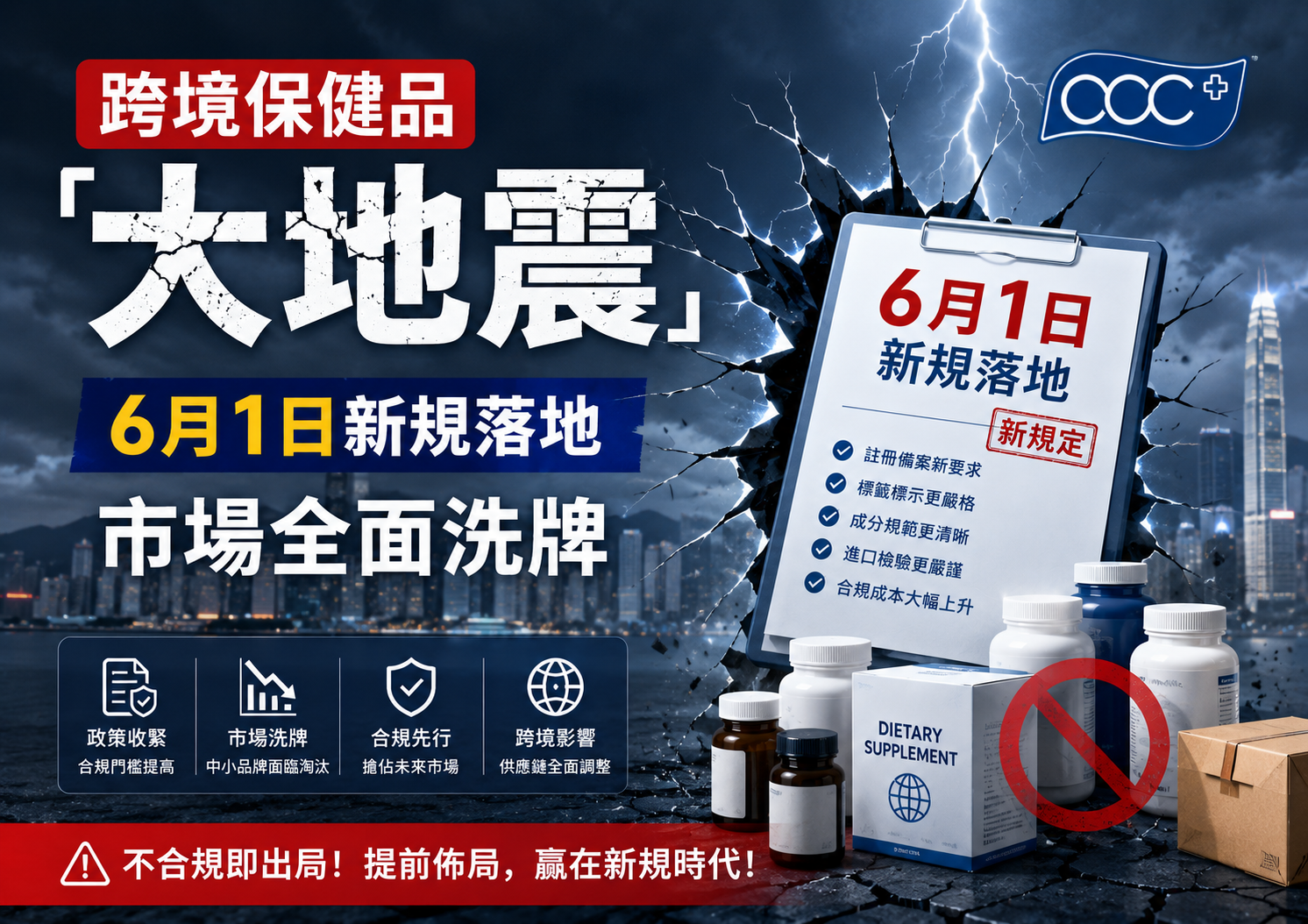
On June 1, 2026, the General Administration of Customs (GACC) Order No. 280 takes effect — described in the industry as the strictest cross-border compliance storm yet.
Many brands once assumed that simply attaching their name to an overseas contract factory and obtaining a registration number was enough, forever. Order No. 280 shifts the core logic from "pre-market entry approval" to "full-chain dynamic oversight." Customs no longer looks only at the paperwork presented at the border — it can launch written inspections or even video verification at any time. If an overseas manufacturer’s production address changes, its legal representative changes, or its local production licence expires without being reported, the registration number is cancelled outright and the goods are returned on the spot. This routine re-inspection mechanism is designed to cut off "shell factories" and unlicensed workshops from the market.
If registration governs the "façade," the "key monitored ingredients list" governs what is inside. Around 20 popular ingredients — including NMN, melatonin, Coenzyme Q10, glutathione, quercetin, and ashwagandha — are now on the watch list. Supplements are not snacks, and biochemistry knows no borders: an ingredient classed as a dietary supplement abroad may be a tightly regulated drug or an unapproved novel food ingredient domestically. Once the rules take effect, importing an NMN product without official documentation of edibility and a free-sale certificate from the country of origin will see customs clearance blocked.
Many consumers assume that anything shipped from a bonded warehouse must be genuine imported goods. In reality, some products are made domestically, routed through Hong Kong, and then enter a bonded warehouse to "transform" into imports. Combined with an upgraded traceability system, the new rules crack down hard on this origin-laundering. Regulators are also levelling the playing field against cross-border products that claim to be freer or make more exaggerated claims than domestically registered ones. Pseudo-scientific claims like "anti-cancer," "age-reversing," and "cure-all" — built up through livestream sales patter — will have nowhere to hide under strict label-compliance review. Chinese labels must meet the GB7718 standard, and every efficacy claim must be backed by evidence.
For brands, now is not the time to wait and see. It is time to verify the registration validity of overseas suppliers, audit ingredient lists, and build a complete supply-chain compliance file. Tighter regulation is not meant to kill the industry — it is meant to weed out bad actors so genuine, R&D-driven, principled brands can rise to the surface.
And this is exactly where ACC+ comes in.
ACC+ is a genuine manufacturing factory rooted in Hong Kong — not a label-slapping operation, not a "bonded-warehouse day trip," but a real local manufacturer with real facilities and real production credentials. Under Order No. 280’s full-chain oversight, you do not need to worry about documentation or production compliance: from certificates of origin, free-sale certificates, and compliant-production certificates, to Chinese labelling and ingredient-compliance review, we handle all the certification paperwork for our clients in one stop. In this "first year of compliance," choosing a real factory that can withstand scrutiny is your safest move.